
The United States' move to suspend South Africa and Rwanda from duty-free access to its market under the African Growth and Opportunity Act (AGOA) could create fresh trade challenges for the two African economies, particularly exporters seeking to maintain competitiveness in the US market.
The decision, announced by Washington on Monday, November 2, threatens preferential access to one of the world's largest consumer markets under a programme designed to support trade, investment and economic development across eligible African countries.
South Africa: A Major AGOA Beneficiary Faces Trade Uncertainty
South Africa has historically been the largest beneficiary of AGOA, exporting more goods under the programme than any other participating African country.
In 2025, the country exported approximately $1.7 billion worth of goods to the United States under AGOA, compared with total US imports of about $5 billion under the programme.
Despite these figures, AGOA-related exports represented only around 1% of South Africa's total global exports last year, according to the country's trade ministry. Nearly 90% of South African exports to the US already entered outside AGOA preferences.
The United States remains South Africa's second-largest export destination after China. Bilateral trade between Pretoria and Washington reached approximately $29 billion in 2025, while trade with China stood at around $36 billion.
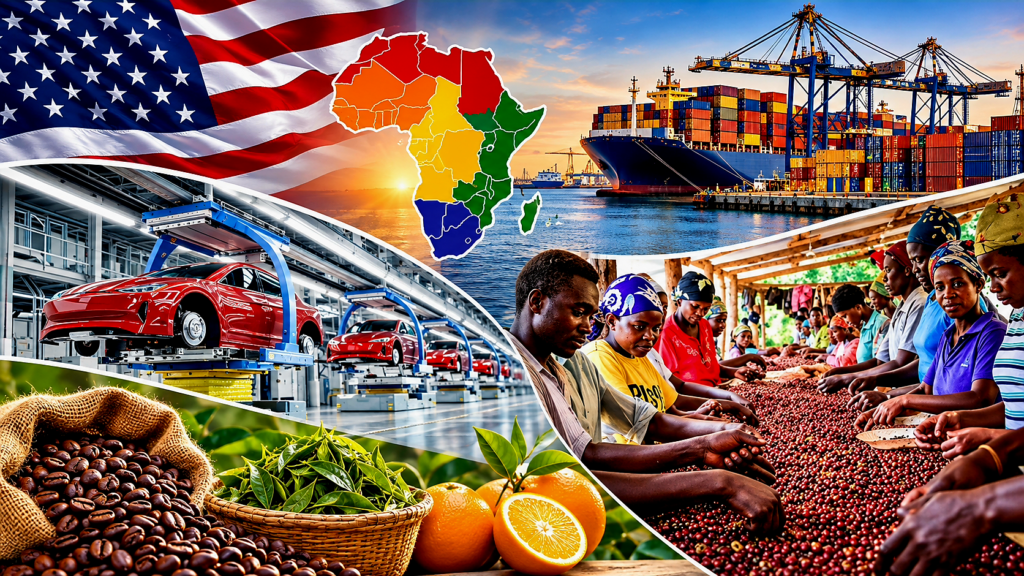
South Africa's major exports to the US include precious stones and metals, motor vehicles, iron and steel. Under AGOA, its principal exports include motor vehicles and automotive components, as well as agricultural products such as citrus fruits and wine.
The suspension could increase the cost of affected South African products entering the American market, potentially weakening their price competitiveness and putting pressure on exporters, manufacturers and agricultural producers.
Rwanda: Agricultural Exporters Could Face Additional Pressure
For Rwanda, the potential loss of AGOA benefits comes against the backdrop of previous trade restrictions imposed by Washington.
In 2018, during US President Donald Trump's first administration, Rwanda lost its duty-free privileges for clothing exports to the United States after Kigali increased tariffs on imports of second-hand clothing and footwear.
Rwanda's exports to the US under AGOA are primarily agricultural, particularly coffee and tea, alongside smaller shipments of processed and mineral products.
US import data show that goods imported from Rwanda reached $43.3 million in 2025, representing a 43.3% increase, or $13.1 million, from 2024. However, official figures do not specify how much of these imports entered under AGOA preferences.
A broader suspension could expose more Rwandan exporters to standard US import duties, potentially affecting their competitiveness and the country's efforts to expand agricultural and processed-goods exports.
Why AGOA Eligibility Matters
The African Growth and Opportunity Act provides qualifying sub-Saharan African countries with preferential, largely duty-free access to the US market.
Eligibility is determined by several conditions, including economic development, the rule of law, respect for human rights and whether a country undermines US national security or foreign policy interests.
Several African countries have previously lost their AGOA eligibility, including Ethiopia, Burkina Faso, Cameroon and the Central African Republic, largely over concerns relating to human rights and the rule of law.
What This Means for African Trade
The potential suspension of South Africa and Rwanda highlights the vulnerability of African exporters to changes in US trade policy.
For South Africa, the implications extend beyond the direct value of AGOA exports, particularly for automotive manufacturers and agricultural businesses that have benefited from preferential market access.
For Rwanda, the impact could be felt among coffee, tea and other agricultural exporters seeking to expand their presence in the American market.
More broadly, the development raises questions about the stability of preferential trade arrangements and the need for African economies to diversify export destinations, strengthen regional trade and expand value-added production.
As African countries pursue greater economic integration under the African Continental Free Trade Area (AfCFTA), the latest US decision underscores the importance of building more resilient trade relationships and reducing excessive dependence on individual export markets.
Source: Reuters
Reporting: Nellie Peyton, Bate Felix & Ammu Kannampilly
Editing: Barbara Lewis