
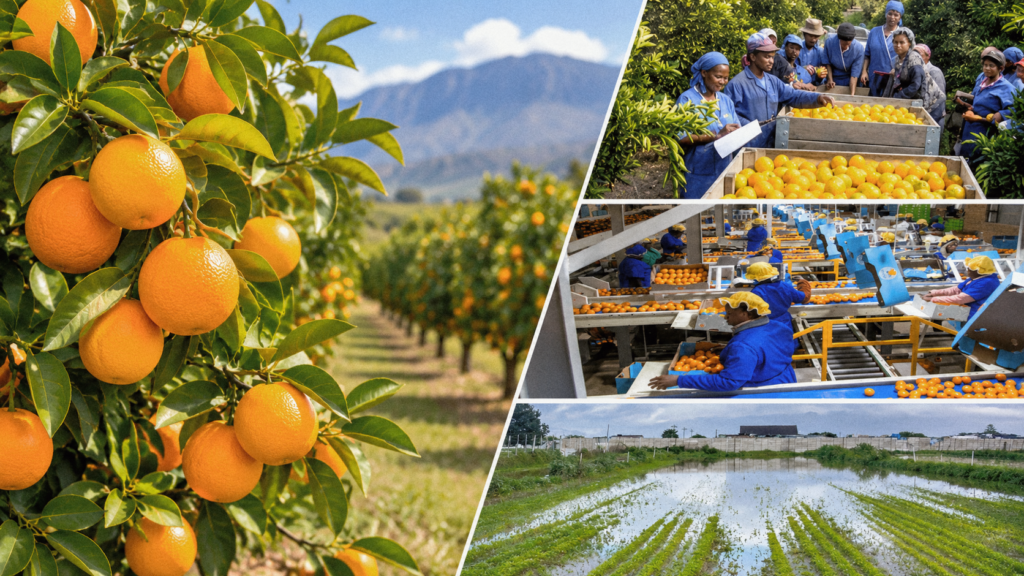
South Africa’s citrus exports declined by 1.5% in the 2026 season as shipping disruptions linked to the US-Israeli war with Iran and adverse weather conditions affected production and access to key international markets.
The Citrus Growers’ Association of Southern Africa (CGA) said on Thursday that growers exported 201 million cartons of citrus during the 2026 season, down from 204 million cartons recorded in 2025.
South Africa is the world’s second-largest citrus exporter by value, after Spain, with citrus representing the country’s biggest agricultural export. The sector generated 44.9 billion rand ($2.7 billion) in export earnings in 2025.
Middle East Shipping Disruptions Affect Exports
Exporters faced significant logistical challenges in reaching Middle Eastern markets, which typically account for approximately 20% of South Africa’s citrus exports.
A shortage of shipping containers and disruptions to established trade routes forced exporters to seek longer alternative routes to reach important destinations, including Iraq and Saudi Arabia, according to the CGA.
These logistical constraints added pressure to an export season already affected by production challenges.
Severe Weather Damages Citrus Production
Adverse weather conditions also contributed to the decline in export volumes.
Flooding across South Africa’s Western Cape and Eastern Cape provinces destroyed some orchards in important citrus-producing regions, affecting the country’s production capacity.
The damage highlights the growing exposure of South Africa’s agricultural sector to extreme weather events and climate-related production risks.
US Trade Uncertainty Adds to Industry Concerns
Citrus exporters are also preparing for the potential impact of South Africa’s exclusion from the United States’ African Growth and Opportunity Act (AGOA).
The end of duty-free access under the trade programme threatens exports to a market that accounts for approximately 5% of South Africa’s citrus shipments.
The development introduces another trade-related challenge for an industry already navigating shipping disruptions, weather-related losses and changing international market conditions.
Source: Reuters
Reporting: Nelson Banya
Editing: Emelia Sithole-Matarise.