
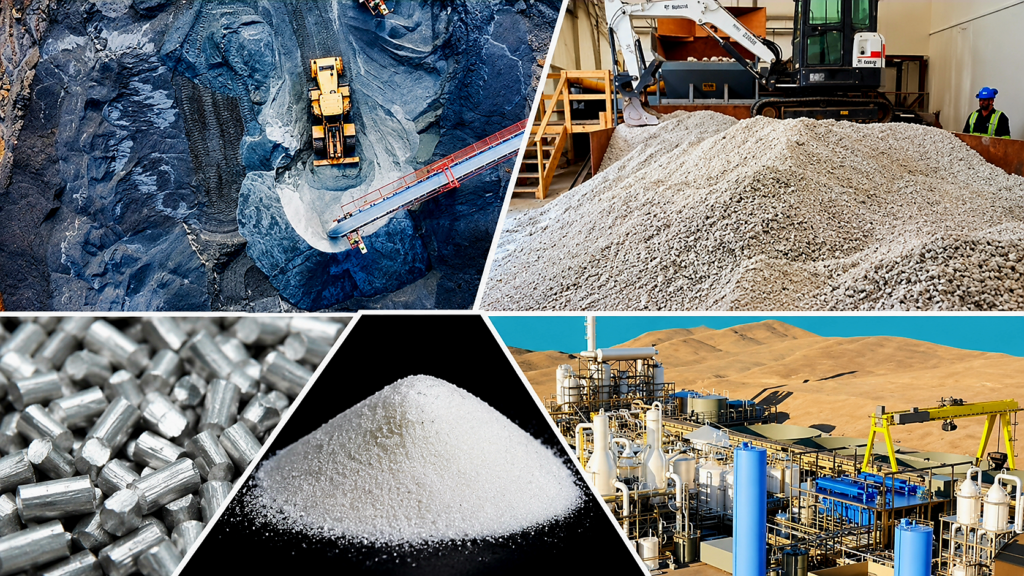
Harare– Zimbabwe's lithium sulphate production is expected to reach 208,000 metric tonnes in 2027 as new processing facilities come online, but mining companies are calling for a six-month delay to a planned ban on lithium concentrate exports, according to an industry report released on Monday.
Africa's largest lithium producer began exporting lithium sulphate in April after Zhejiang Huayou Cobalt's Zimbabwean subsidiary commissioned the country's first lithium salt processing plant.
Between April and September, Zimbabwe exported 33,807 tonnes of lithium sulphate, a battery-material precursor used in the production of lithium hydroxide and lithium carbonate.
Other major producers, including China's Sinomine and Sichuan Yahua, are also developing lithium sulphate processing facilities at their Zimbabwean mining operations ahead of the government's planned January 2027 ban on lithium concentrate exports.
The government introduced the export restriction as part of efforts to encourage domestic processing, increase value addition and capture more economic benefits from the country's mineral resources.
However, lithium miners are seeking to push the implementation deadline to July 2027 to allow additional time for the completion of processing plants, a survey commissioned by the Chamber of Mines showed.
Zimbabwe's lithium concentrate production is forecast to reach 2.3 million tonnes in 2027, up from an estimated 2.2 million tonnes this year.
The survey warned that implementing the export ban as scheduled could leave the country with a stockpile of approximately 1.4 million tonnes of lithium concentrate by the end of 2027.
The situation highlights the challenges Zimbabwe faces in balancing its ambitions to develop a domestic battery-minerals processing industry with the operational readiness of mining companies.
Africa Business Outlook
Zimbabwe's lithium industry is entering a critical phase as the government pushes for greater local value addition. The success of its export restrictions will depend on whether new processing facilities can meet production requirements while maintaining the competitiveness of the country's mining sector.
Source:Reuters
Reporting:Nelson Banya
Editing:Jacqueline Wong.