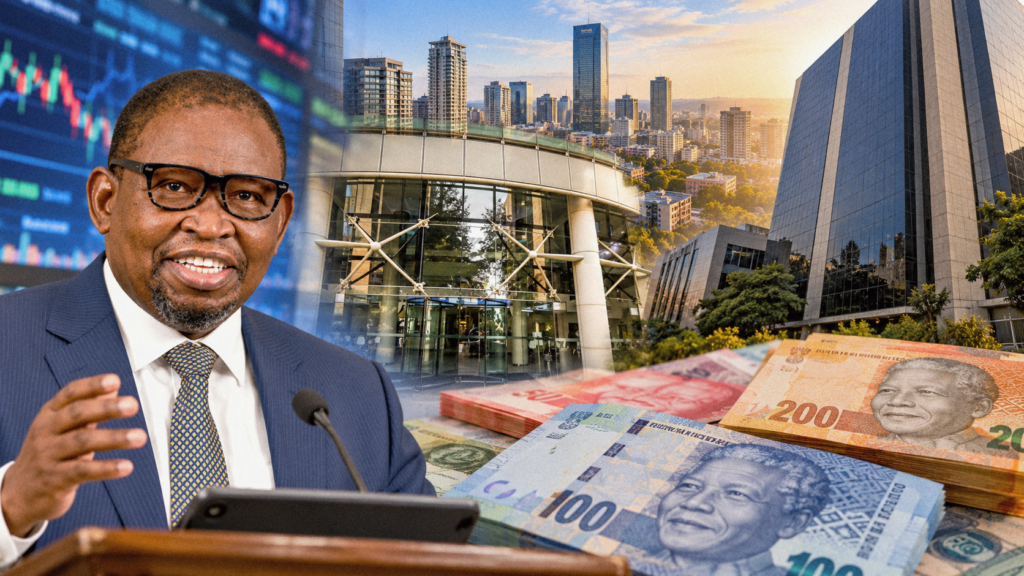

South African financial markets face a mix of domestic economic developments and global uncertainties on Friday, as investors assess rising oil prices, fiscal policy concerns and a sell-off in international equity markets driven by fears over artificial intelligence (AI) spending. An inflation-linked government bond auction is also in focus, offering investors an opportunity to assess demand for South African debt.
Rand Under Pressure as Oil Prices Rise
The South African rand weakened on Thursday as rising oil prices increased pressure on the country's fuel-importing economy.
Investors also continued to assess the government's mid-year budget review, which included two months of temporary fuel levy relief. While the measure offers temporary relief from fuel costs, developments in international oil markets remain an important factor for the domestic economic outlook.
Higher oil prices can increase import costs and add to inflationary pressures, potentially complicating the outlook for interest rates and the rand.
On the Johannesburg Stock Exchange (JSE), the Top-40 index fell approximately 1.2% on Thursday.
Inflation-Linked Bond Auction in Focus
South Africa is scheduled to hold an inflation-linked bond auction on Friday, placing government borrowing and investor demand for inflation-protected securities in focus.
The auction comes as investors assess the country's fiscal position and the government's plans for managing public finances.
Demand for the bonds will be an important indicator of investor appetite, although the auction results will be needed to establish the strength of that demand.
Global Markets Weaken as AI Spending Concerns Grow
Asian shares fell on Friday as concerns about the substantial funding requirements of artificial intelligence investments weighed on technology stocks.
The uncertainty also prompted investors to move towards sovereign bonds and safe-haven currencies. According to Reuters, the resulting rally in US Treasuries was the strongest daily advance in more than three years.
The concerns followed a sharp sell-off on Wall Street on Thursday, highlighting growing investor scrutiny of the costs and potential returns associated with AI investments.
For South Africa, sustained global risk aversion could affect demand for emerging-market assets, including local equities and the rand.
Wall Street Suffers Sharp Decline
US stocks tumbled on Thursday, with the Nasdaq recording its steepest daily decline since early June.
A series of earnings reports from prominent companies reignited concerns about the scale of spending on artificial intelligence and whether those investments will deliver sufficient returns.
The sell-off underscores the sensitivity of global markets to technology-sector earnings and expectations surrounding future AI growth.
Further weakness in US equities could influence international investor sentiment and contribute to volatility across emerging markets.
Gold Heads for Steepest Weekly Decline in More Than Four Months
Gold prices eased on Friday and were on course for their steepest weekly decline in more than four months.
Elevated oil prices have strengthened expectations that interest rates could remain higher for longer, weighing on gold, which does not offer interest income.
Investors are also awaiting next week's Federal Reserve policy meeting for further guidance on the US interest-rate outlook.
The direction of interest-rate expectations will remain important for gold prices, the US dollar and international capital flows.
South Africa's Fiscal Policy and Regulatory Developments
Two domestic policy stories are also attracting attention.
Business Day reported that the cryptocurrency industry had welcomed the government's decision to redraft regulations governing digital assets.
Meanwhile, News24 reported that Finance Minister Enoch Godongwana remained confident that Parliament could pass a fiscal anchor despite opposition from two political parties.
The proposed fiscal anchor is relevant to discussions about government spending, debt sustainability and the credibility of South Africa's public finances.
Key Factors to Watch on Friday
The rand: Monitor movements in the currency amid rising oil prices and changes in global risk appetite.
Inflation-linked bonds: Watch the government bond auction for indications of investor demand.
Oil prices: Further increases could add to South Africa's import costs and inflationary pressures.
Global equities: Continued technology-sector weakness could weigh on investor sentiment.
Gold prices: Expectations surrounding interest rates and the Federal Reserve's next policy decision remain key drivers.
Fiscal policy: Developments concerning the government's proposed fiscal anchor could influence investor perceptions of South Africa's public finances.
Source: Reuters
Reporting: Sfundo Parakozov
Editing: Harikrishn Nair