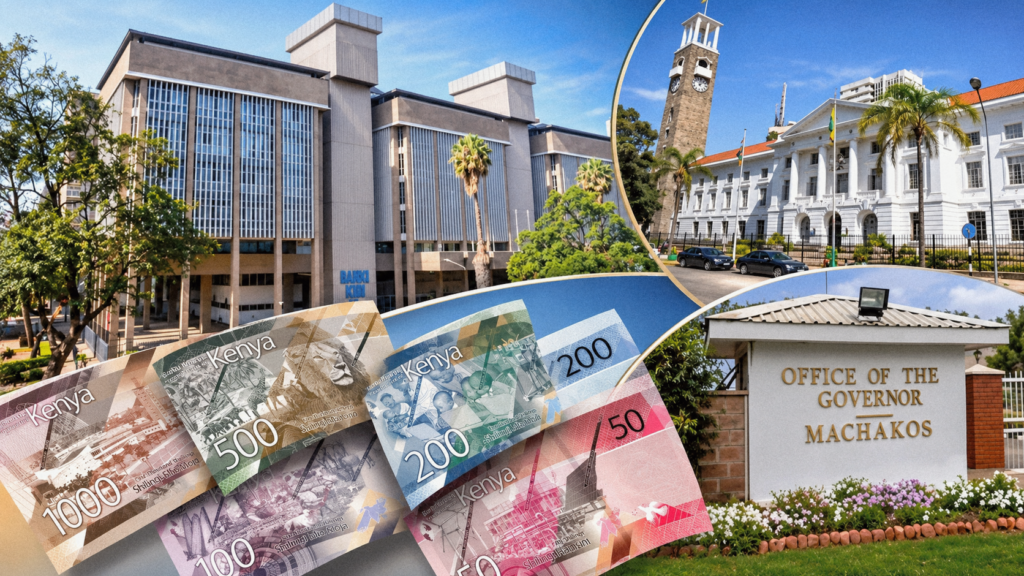
The World Bank has urged Kenya to intensify efforts to tackle corruption, warning that weak governance is constraining economic growth, investment and job creation, even as it upgraded its 2026 growth forecast following stronger-than-expected economic performance in the first half of the year.
In its latest biannual Kenya Economic Update, the World Bank identified corruption as a major obstacle to faster and more inclusive economic development.
The lender raised its forecast for Kenya's economic growth in 2026 to 4.6%, up from its previous projection of 4.3%, citing stronger-than-expected expansion during the first six months of the year.
However, the revised forecast remains below the Kenyan government's expectation of at least 5% growth.
Corruption Poses Economic Risks
The World Bank estimates that corruption and collusion cost Kenya approximately 2% of its gross domestic product (GDP) annually, contributing to higher fiscal deficits and increasing the government's borrowing requirements.
The lender warned that corruption also raises the cost of sovereign borrowing, as investors demand higher returns to compensate for governance-related risks.
Kenya has faced mounting debt repayment obligations following years of borrowing to finance infrastructure development, while repeatedly struggling to meet its fiscal deficit targets.
According to the World Bank, addressing governance weaknesses would help reduce fiscal pressures, strengthen investor confidence and create conditions for more sustainable economic growth.
Government Highlights Governance Reforms
Kenya's Treasury Principal Secretary, Chris Kiptoo, said the government had introduced several measures aimed at improving transparency and accountability in public administration.
These include more predictable payment timelines for government contractors, a new conflict-of-interest law and the digitisation of public procurement processes.
Kiptoo maintained that governance reforms remain central to the country's development agenda.
He also said the government expects the economy to expand by at least 5% this year, arguing that the World Bank's revised forecast implies a sharper slowdown in the second half of 2026 than current economic conditions suggest.
Election Risks and Fiscal Pressures
The World Bank cautioned that Kenya's economic outlook faces several downside risks, particularly potential fiscal slippage that could increase public debt.
The country's general election, scheduled for August 2027, could also introduce economic uncertainty, potentially affecting investment, tourism and government spending.
The lender warned that maintaining fiscal discipline and strengthening governance would be important in managing these risks.
The World Bank's estimate that corruption and collusion cost the country around 2% of GDP annually highlights how public-sector inefficiencies can weaken government finances, increase borrowing costs and limit resources available for infrastructure, healthcare, education and job creation.
For investors and businesses, stronger governance could improve transparency in public procurement, reduce financial risks and strengthen confidence in Kenya's business environment.
Although the upgraded 4.6% growth forecast signals improved economic performance, the country's ability to sustain growth will depend partly on controlling public expenditure, managing debt and addressing institutional weaknesses.
Source:Reuters
Reporting:Duncan Miriri
Editing:Alexandra Hudson &Mark Potter