
Luanda – Angola expects its economy to grow by approximately 5.5% in 2027, maintaining a pace similar to this year's projected expansion, provided international oil prices average $71 per barrel, according to the country's draft budget released on Friday.
The proposed 2027 budget, which is expected to be presented to parliament, outlines the government's economic outlook, spending priorities and fiscal projections. The figures remain subject to possible revisions during the legislative process.
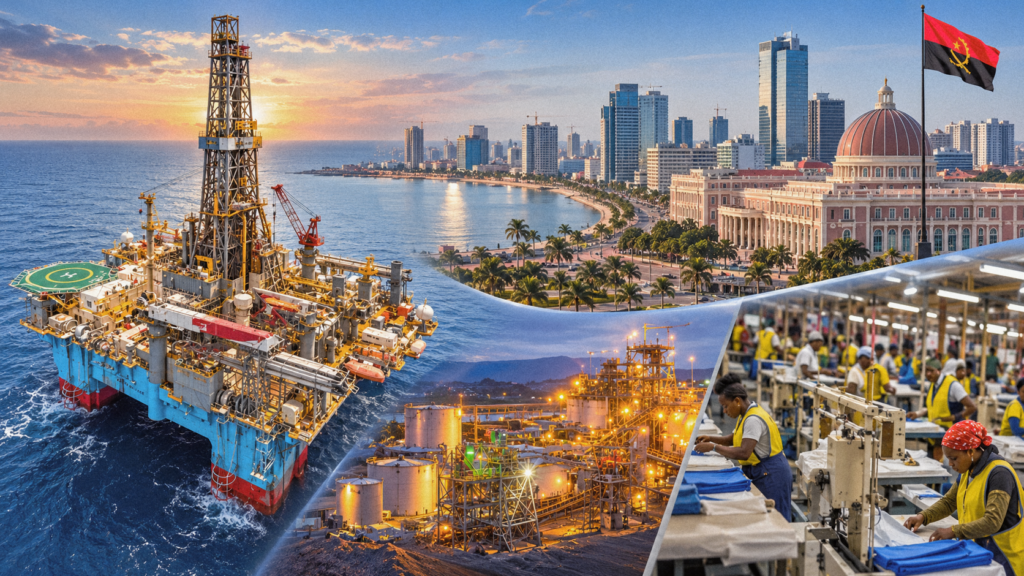
Growth next year is expected to be driven primarily by the non-oil sector, which is projected to expand by 7.19%, highlighting the government's continued efforts to diversify the economy beyond crude oil.
In contrast, Angola's oil sector is forecast to contract by 3.82%, reflecting an anticipated decline in production.
The government expects crude oil production to average approximately 1 million barrels per day (bpd) in 2027, down from an estimated 1.05 million bpd in 2026.
Angola, Sub-Saharan Africa's second-largest crude oil producer, had projected economic growth of 5.57% for 2026 in its mid-year budget review.
Fiscal outlook and government spending
The draft budget projects a fiscal deficit equivalent to 3.8% of gross domestic product (GDP) in 2027.
Government expenditure is estimated at 37.3 trillion kwanzas ($40.9 billion), with debt servicing expected to account for approximately 43% of total spending, underscoring the significant pressure debt obligations continue to place on public finances.
Inflation Expected To Ease
Angola also anticipates a modest improvement in inflation next year, with consumer prices projected to rise by 7.27% year-on-year by the end of 2027.
Inflation stood at 8.43% in September 2026, indicating that the government expects price pressures to moderate further over the coming year.
The budget assumptions highlight Angola's continued dependence on oil revenues while pointing to stronger expected growth in non-oil activities.
However, lower projected crude production and substantial debt-servicing obligations remain important considerations for the country's fiscal outlook.
Source: Reuters
Reporting: Miguel Gomes
Writing: Anathi Madubela & Nilutpal Timsina
Editing: Aidan Lewis