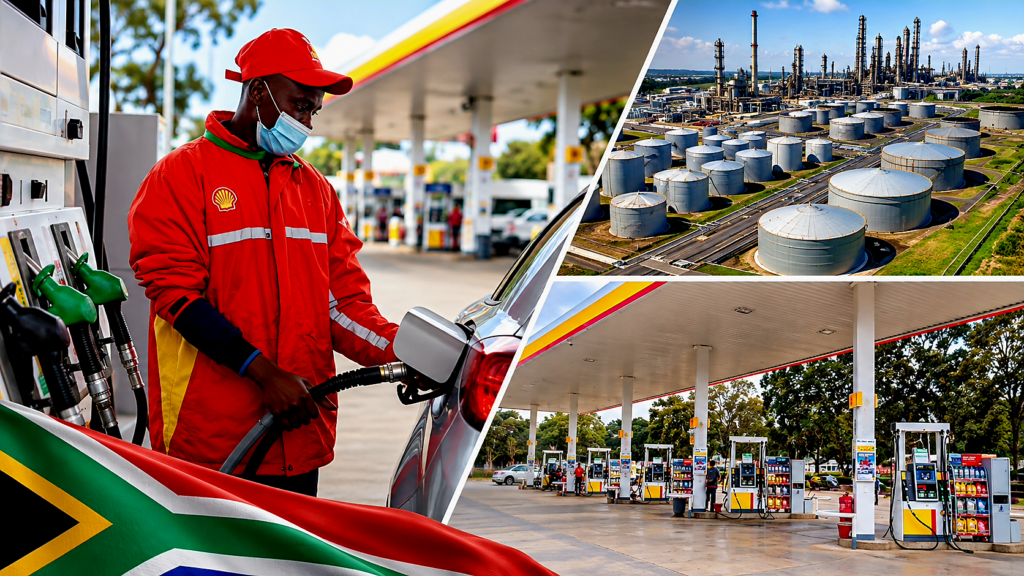

Although Nigeria has long been one of Africa’s leading oil-producing countries, it has continued to rely on imports to meet the remainder of its domestic fuel demand. Beyond the financial costs, this economic model has limited the country’s energy security and increased the economy’s vulnerability to price fluctuations on global markets.
Thanks to years of investment in the petroleum industry, the situation is now beginning to change. According to data presented by the head of the Nigerian Midstream and Downstream Petroleum Regulatory Authority (NMDPRA), domestic refining capacity has increased from 5,000 barrels per day in 2021 to 682,000 in 2026. That represents a 13,540% increase!
From raw material exporter to fuel producer
For many years, Nigeria’s oil sector exported crude oil as a raw material while simultaneously importing a significant portion of finished petroleum products from abroad. Limited domestic refining capacity meant that even high levels of crude oil production did not automatically translate into fuel supply security.
The situation began to change significantly in 2021, when the Petroleum Industry Act came into force. The legislation introduced a new regulatory framework for the sector and laid the groundwork for greater private-sector participation in the oil industry. This was an important step, and its effects are now particularly visible in the refining segment, where new investments have begun to reshape the market.
The most important player here is, of course, Dangote Petroleum Refinery, which is rapidly expanding its presence in African markets. Located in Lagos, the facility processes hundreds of thousands of barrels of crude oil per day and ranks among the largest single-site refinery complexes in the world.
In addition to refining crude oil and producing gasoline, Dangote also manufactures jet fuel and petrochemical products, creating additional economic value for Nigeria.
Nigeria may soon become self-sufficient in meeting its fuel needs
According to data presented by the head of the NMDPRA, domestic refineries accounted for approximately 74% of gasoline supplies to the Nigerian market in September 2026, compared with about 44% a year earlier. Gasoline imports, meanwhile, fell from 22.1 million to 10.2 million litres per day. In the case of diesel, domestic refineries accounted for 93% of total supplies. These figures confirm that the transformation is no longer just a matter of long-term investment plans – it is already happening.
Despite the optimistic picture painted by these figures, however, several challenges remain. One of them is ensuring reliable access to crude oil. The Petroleum Industry Act introduced the Domestic Crude Supply Obligation mechanism, which is intended to support the supply of Nigerian crude oil to domestic refineries.
The NUPRC (Nigerian Upstream Petroleum Regulatory Commission) previously noted that, in the first quarter of 2026, supplies were constrained by commercial disputes between producers and refineries. The situation improved over the following two quarters, and for the sake of the Nigerian economy, let’s hope it stays that way.
Can Nigeria become the energy hub of West Africa?
Nigeria’s ambitions may now extend far beyond simply eliminating imports of refined fuels. Increased processing capacity at major refining companies could lay the groundwork for fuel exports to neighbouring markets, which also need stable supplies of petroleum products.
Of course, this will require further investment. In recent statements, the NMDPRA has highlighted the need to expand storage facilities, terminals, transportation infrastructure and distribution networks. The oil and gas sector is estimated to require between $30 billion and $50 billion in new investment.
But let’s focus on the positives. Nigeria has taken a major step towards transforming its energy model. The next challenge is to turn this progress into lasting economic change, with the transformation of the country’s fuel industry playing an important role.