
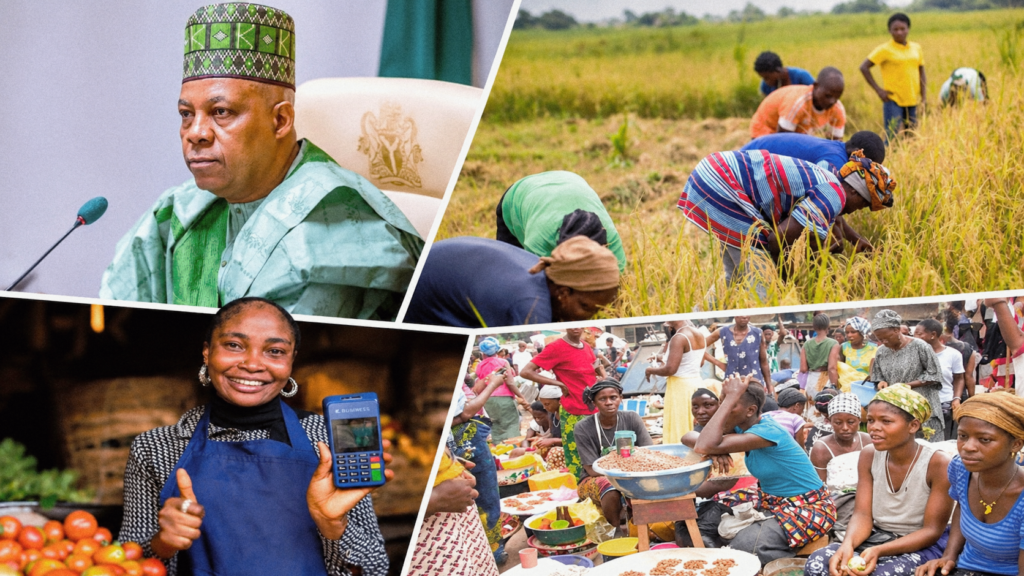
Abuja – Nigeria's government has called on financial institutions to expand access to affordable financing for agriculture and small businesses, saying improved credit availability is essential to driving economic growth, creating jobs and increasing rural incomes.
Speaking at a Moniepoint microfinance event in Abuja on Friday, Vice President Kashim Shettima said financial inclusion must go beyond opening bank accounts to providing meaningful economic opportunities, particularly for women, young entrepreneurs, rural households and small businesses.
Finance makes a difference when it helps people move from what they can imagine to what they can achieve," Shettima said.
He urged lenders to increase financing across the agricultural value chain, stressing that farmers, aggregators, processors, transporters and traders all require tailored financial support to boost food production and reduce post-harvest losses.
"We have to move from financial access to economic opportunity," he added.
The government's appeal highlights the importance of affordable credit in strengthening Nigeria's agricultural sector, supporting small enterprises and expanding economic participation.
Agricultural productivity: Increased access to financing could help farmers invest in inputs, equipment, storage and transportation.
Small business growth: Affordable credit can enable small enterprises to expand operations, create jobs and improve productivity.
Food security: Financing across the agricultural value chain could help increase food production and reduce post-harvest losses.
Financial inclusion: Greater access to credit could improve economic opportunities for women, young entrepreneurs and rural communities.
Expanding affordable financing could play an important role in Nigeria's economic development. However, the impact will depend on whether lenders can provide accessible credit on sustainable terms, particularly to small businesses and farmers who often face challenges meeting traditional lending requirements.
Source: Reuters
Reporting:Camillus Eboh
Writing: Elisha Bala-Gbogbo