
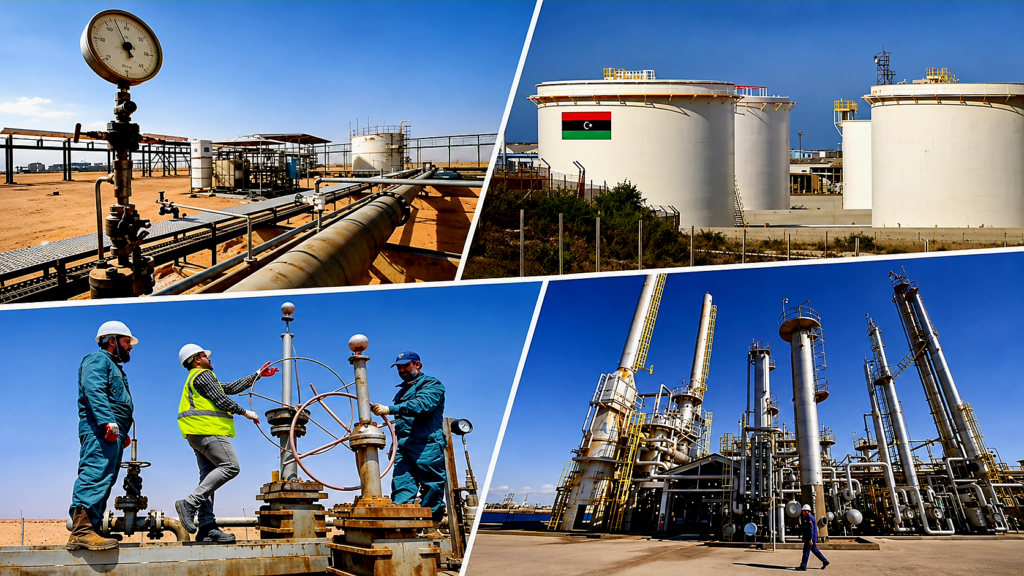
Libya's Sharara oil pipeline has reopened, with crude pumping resuming and oil beginning to flow into storage tanks at the Akakus facility in Zawiya, the chairman of the National Oil Corporation (NOC) told Reuters on Monday.
The reopening followed a shutdown lasting nearly 10 hours after an "unlawful group" closed a valve on the pipeline, threatening to disrupt approximately 350,000 barrels per day (bpd) of oil production, according to the NOC.
Engineers at the Sharara oilfield confirmed that pumping operations had resumed, easing concerns over a potential disruption to one of Libya's key sources of crude oil production.
However, a second pipeline connecting the Hamada oilfield to the country's largest refinery in Zawiya remains closed after more than two weeks, resulting in the loss of approximately 15,000 bpd, the NOC said.
The company reported in October that an armed group had shut a valve on the main Hamada crude oil pipeline, halting supplies. On Saturday, the NOC said the forced closure had cost Libya more than $30.8 million.
Located in southwestern Libya, the Sharara oilfield is operated by a joint venture involving the state-owned NOC through Akakus Oil Operations, alongside Spain's Repsol, France's TotalEnergies, Austria's OMV and Norway's Equinor.
Libya's oil production has faced repeated disruptions caused by political disputes, security challenges and technical problems since the 2011 uprising that toppled Muammar Gaddafi.
Oil remains the backbone of Libya's economy, accounting for approximately 90% of economic activity and making uninterrupted production critical to government revenues and the country's financial stability.
Source: Reuters
Reporting: Yomna Ehab and Ayman Al Warfali
Editing: Tom Hogue, Lincoln Feast and Joe Bavier