Transportation costs, food production, machinery imports, and debt servicing are just some of the areas of the economy that depend on global oil prices.
In Africa, however, high commodity prices do not affect every country in the same way. Energy importers face rising costs, while exporters can benefit from additional revenues.
Oil prices are rising, and supply risks are increasing
In early September, the price of a barrel of oil exceeded $100. Investors reacted almost immediately to concerns over potential supply disruptions linked to the conflict in the Middle East. Shipping costs and the availability of refined fuels are particularly important for Africa, as many countries import significant quantities of petroleum products.
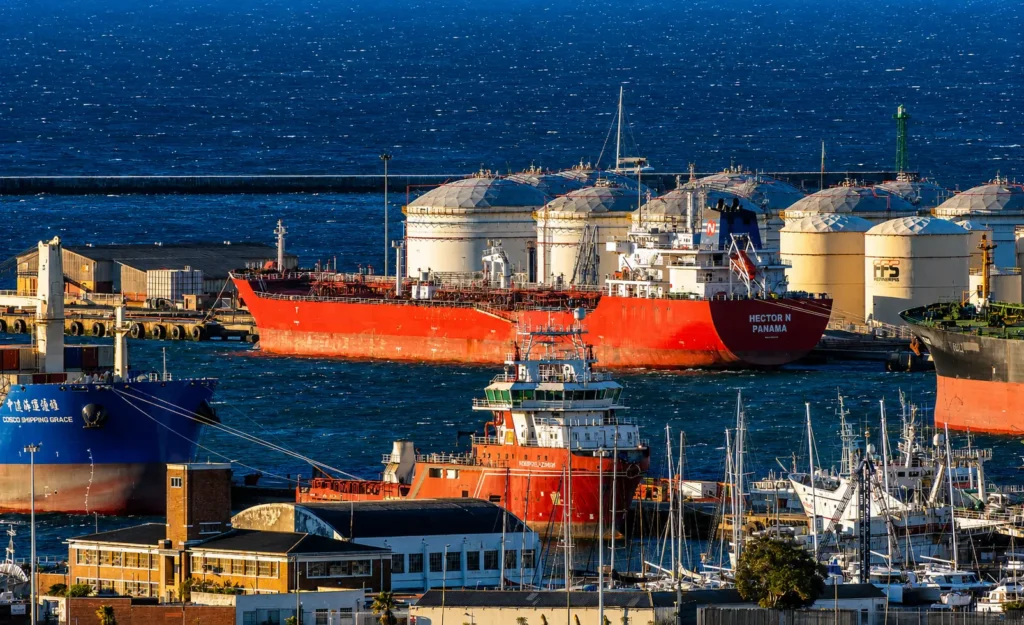
Africa is changing the sources of its diesel imports
The diesel market provides one of the clearest examples. In August, Asian diesel exports to Africa rose to 1.8–2 million metric tons (according to Reuters), the highest level in nearly five years. At the same time, shipments from the Middle East fell to 600,000–800,000 metric tons, the lowest level in nearly nine years.
This is an important shift for logistics companies, freight carriers, and fuel importers. It’s not only about the price of the raw material, but also about product availability and delivery times. An unreliable supply source forces companies to source products from other suppliers—which are often more expensive or take significantly longer to deliver.
Costs are rising faster than revenues
Higher fuel prices will force suppliers of goods and services to raise their prices or accept lower margins. This, in turn, could reshape parts of the African economy. Transportation, agricultural, industrial, and retail companies are likely to feel the greatest pressure, as they face higher energy costs while having limited room to increase prices.
The process is clear: higher diesel prices increase the cost of transporting goods, and those costs are eventually reflected in the prices of food, building materials, and consumer goods. If a company cannot pass the additional costs on to customers, its profitability falls.
Exporters may have reason to be optimistic
Interestingly, not everyone is losing out in this crisis. High oil prices can increase the potential revenues of countries and companies that export raw materials. In Africa, oil and gas producers, as well as companies that process raw materials, stand to benefit.
South Africa’s Sasol is a good example. The company reported that its annual earnings rose by 9 percent to 38.31 rand per share partly due to higher oil prices and increased fuel sales. At the same time, Sasol did not pay a dividend because its debt was $3.3 billion, which exceeding the established limit.
that higher commodity prices can improve operating results without necessarily translating into larger payouts to shareholders. High debt levels and the costs of the energy transition continue to limit companies’ financial flexibility.
Nigeria Wants to Take Advantage of the Moment
High fuel prices could create opportunities for African countries with oil and gas reserves. Nigeria, among others, stands to benefit. The country’s authorities hope that the growing importance of energy security will attract more investor interest to the domestic oil and gas sector. According to Fatih Birol, head of the International Energy Agency, Nigeria could double its energy investments within five years. The country also plans to increase oil production to 3 million barrels per day by 2030.
It is an ambitious goal, but its implementation success will depend on infrastructure, security, regulatory stability, and the country’s ability to attract capital. In this case, it will be important not only to consider the price at which the fuel can ultimately be sold, but also the logistics of its transportation and production.
Africa needs resilience against high fuel prices today
There are currently no signs that the conflict in the Middle East will end soon. This matters because it is directly linked to global oil prices. If oil remains at elevated levels—or rises further in the coming months—companies will have to recalculate their costs and, as a result, raise product prices and pass higher transportation costs on to customers.
Companies with long term fuel contracts, their own energy sources, or the ability to adapt prices quickly are better positioned to withstand the pressure. Those operating on thin margins and relying on fuel imports paid for in dollars may feel the impact much sooner.
High energy prices do not necessarily have to trigger a lead to a crisis. The greatest risk comes from a combination of more expensive raw materials, a weak exchange rate, high interest rates, and limited ability to pass rising costs on to customers.
For African economies, resilience to price changes will therefore be crucial key, rather than simply waiting for prices to fall. Diversifying supply sources, accelerating infrastructure development, improving energy efficiency, and creating more predictable rules for investors will all play an important role.
In the coming months, higher oil prices can even improve the position of exporters. If fuel prices continue to rise, in the long run, those who are able to reduce their dependence on imported fuels and turn energy from a cost into a competitive advantage will come out on top.